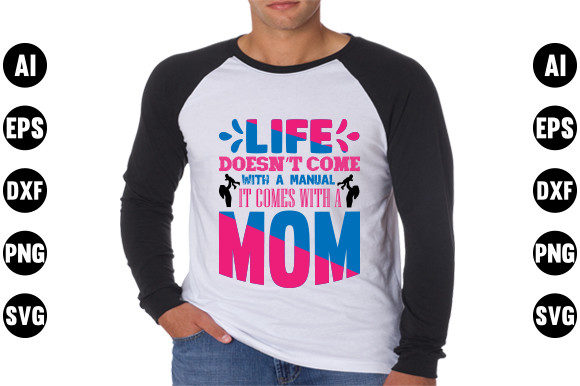
Reviewing the “Life Doesn’t Come With a Manual” Mom Design
As an embroidery designer who has spent years digitizing and stitching thousands of files, I have learned that not all quote designs are created equal. Some look fantastic on a screen but turn into a tangled mess of thread on fabric. Others lack the emotional weight needed for a gift. When I first opened the Mother s Day Quote Design, Life Doesn’t, my immediate reaction was one of cautious optimism. The phrase “Life doesn’t come with a manual, it comes with a mom” is a sentimental favorite in the crafting world, but its success relies entirely on execution.
I approached this review not just as a consumer, but as a practitioner preparing for real client work. I wanted to know if this graphic would hold up under the needle, how it would translate to different textiles, and whether it offered the versatility required for a modern craft business. Here is my practical assessment of using this design in actual embroidery projects.
First Impressions: Mood and Visual Personality
The visual personality of this design is warm, nostalgic, and reassuring. It avoids overly complex flourishes that often plague quote-based graphics, opting instead for a layout that prioritizes readability. For an embroidery project, clarity is king. If a customer cannot read the message from three feet away, the design has failed. This particular arrangement balances the weight of the text effectively, creating a cohesive block that feels substantial without being overwhelming.
The mood it creates is perfectly suited for personalized gifts. It speaks to the chaotic, beautiful reality of motherhood. When I visualize this stitched onto a item, it does not feel like generic clip art; it feels like a tribute. For Etsy sellers and small shop owners, this emotional resonance is what drives conversion. However, the simplicity of the design means that the quality of your stitching and choice of thread colors will carry the entire aesthetic. There is no place for sloppy tension or poor color matching here.
Real-World Application: From Sweatshirts to Tote Bags
To truly test the viability of any machine embroidery design, you must imagine it on various substrates. I mentally placed this design on several common items to gauge its fit.
Sweatshirt Embroidery: This is arguably the strongest use case. A crewneck sweatshirt provides a stable, thick canvas that supports the stitch density required for legible text. The design would sit beautifully on the left chest or centered across the front. The texture of French terry or fleece complements the soft sentiment of the quote, making it an ideal holiday embroidery piece for adult children gifting to their mothers.
Tote Bag Design: Canvas tote bags are staples for craft fairs. Stitching this quote onto a natural cotton canvas creates a rustic, handmade product appeal. The contrast between dark thread and light canvas ensures high visibility. However, because tote bags undergo significant stress, I would recommend using a heavy-cut stabilizer to prevent the fabric from puckering around the letters.
Custom Apparel and T-Shirt Designs: While this falls under the category of T-Shirt Designs, stitching directly onto jersey knit requires caution. The stretch of the fabric can distort the text if not properly stabilized. For a cleaner look on t-shirts, I often prefer using this graphic as a printed element or converting it into an applique design where fabric pieces fill the letters, reducing the stitch count and maintaining the garment's drape.
Technical Considerations and Stitching Challenges
Working with text-based graphics requires a keen eye for detail. The primary challenge with any quote design is the size of the inner spaces in letters like 'e', 'a', and 'o'. If the design is scaled down too much, these areas will fill in with thread, rendering the text illegible. Before committing to a final product, always test the design on scrap fabric at your intended size.
Stitch Density and Type: Without seeing the specific digitizing file, I assume a mix of satin stitch for borders and fill stitch for larger elements. Satin stitches provide a shiny, professional finish but can snag if they are too wide. Ensure that the column width of the satin stitches does not exceed 7mm unless there is a center run stitch to anchor it. For the smaller text, a running stitch or a narrow satin stitch is preferable to maintain definition.
Fabric Texture and Contrast: Thread color selection is critical. On dark fabrics, use high-contrast threads like white, cream, or gold. On light fabrics, deep navy, burgundy, or forest green work well. Avoid low-contrast combinations, such as light gray on white, as the nuance will be lost in the stitch texture. Always check your design in black and white mockups to ensure the contrast holds up regardless of hue.
Where to Use Caution
While versatile, this design is not universal. I would advise against using it on curved surfaces like caps unless the design has been specifically digitized for hats. Standard flat embroidery files will distort on the front panel of a cap due to the curvature and the stiff buckram backing. Similarly, avoid placing this on thin, sheer fabrics like chiffon or lightweight rayon without a full backing of cut-away stabilizer, as the weight of the thread will pull and pucker the material.
Small hoop sizes also present a limitation. If you are working with a 4x4 inch hoop, you may need to split the design or reduce the font size significantly, which risks losing clarity. Always confirm hoop size compatibility before purchasing or starting a job.
Enhancing Product Value and Brand Consistency
For commercial embroidery and small business merchandise, consistency builds trust. Using a high-quality digital embroidery file like this one allows you to create a cohesive line of products. Whether you are selling embroidered patches, aprons, or pillow covers, the professionalism of the stitch-out reflects directly on your brand.
A well-executed version of this design increases the perceived value of the finished product. It transforms a simple item into a keepsake. For baby embroidery, consider softening the thread colors to pastels and using a softer stabilizer to ensure comfort against sensitive skin. For boutique branding, pair the design with premium packaging and a handwritten note to enhance the giftability.
Practical Designer Notes for Best Results
- Test First: Always stitch a sample on the same fabric type you intend to sell. Check for puckering, thread breaks, and registration issues.
- Stabilizer Selection: Use cut-away stabilizer for knits and stretchy fabrics to provide long-term support. Use tear-away for stable wovens like cotton or linen.
- Thread Quality: Invest in high-quality rayon or polyester thread. Cheap thread sheds and breaks, ruining the clean lines of the text.
- Licensing Check: Before selling finished items or using this in commercial projects, verify the license terms provided with the ZIP file. Ensure you have the right to use the EPS, SVG, PNG, and DXF files for commercial purposes.
- Mockups: Create printable mockups and digital previews for your online listings. Show the design on various backgrounds to help customers visualize the final product.
In conclusion, the Mother s Day Quote Design, Life Doesn’t is a solid candidate for your next embroidery project. It offers emotional depth and visual clarity, provided you respect the technical limitations of text-based stitching. By choosing the right fabric, stabilizer, and thread, you can create a handmade product that resonates with customers and stands the test of time. Whether you are an experienced decorator or a hobbyist looking to elevate your craft, this design serves as a reliable foundation for meaningful, marketable goods.